|
|
 |
 |
 |
 |
 |
|
New interpretive topics and programs have been added for the 2010 season at Fort Boonesborough. Several additional and important parts of Kentucky’s early history will be featured, including First Person Character Interpretation of Daniel Boone, Early Distilling and Whiskey Production in Kentucky, Slaves and Free Blacks on the Frontier, Indentures and Apprentice Contracts to 18th C. Tradesmen.
|
|
|
 |
 |
|
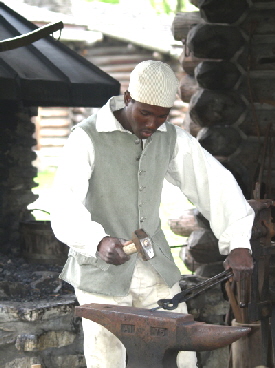
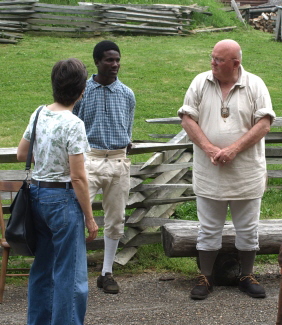
Josiah MacMillan, a native of Liberia who came to America three years ago will be the primary interpreter of the Slaves and Free Blacks on the Frontier program. Liberia, on the west coast of Africa, has a long history of association with slavery. This interpretive program is new to Boonesborough, and to Kentucky State Parks. Slaves were present with Daniel Boone and approximately thirty axmen who cleared a path to the Kentucky River and the site of Boonesborough in 1775, and continued to be a vital part of changing the “howling wilderness” of western Virginia into the Commonwealth of Kentucky during the last quarter of the 18th. Century.
|
|
|
By 1790, the time of the first “federal” census, there were over 12,000 slaves in what is now Kentucky. A very large part of the work of clearing land, raising cabins, planting crops, and tending livestock, was accomplished by slaves. Slaves also worked at a variety of skilled crafts, such as blacksmithing, woodworking, spinning, weaving, brick making, building, rope making, and several others.
|

|
|
|
|
|
 |
 |
 |
 |
 |
 |
|
 |
|
|
|
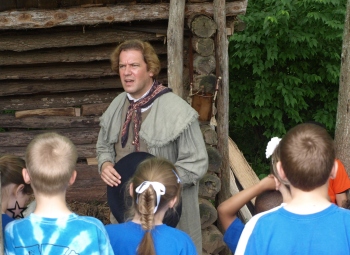
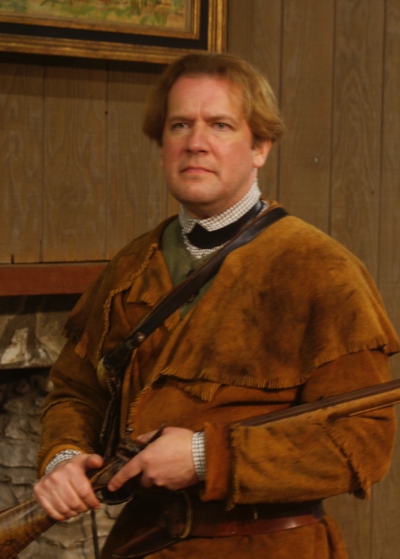
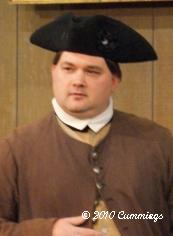
Scott New as Daniel Boone addresses a group of School children.
|

|
|

|
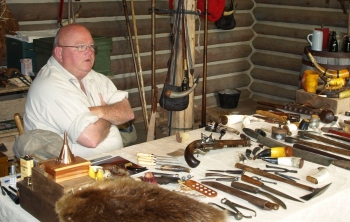
Kentucky Bourbon Whiskey wasn’t always “Bourbon”, but the history of distilling in early Kentucky began right here in central Kentucky, and another new interpretive feature at Boonesborough tells the story. Bob Caudill, a Winchester native, grew up on the site of Strode’s Station, another frontier site begun shortly after Boonesborough. With a lifelong interest in Kentucky history, and continuing research into the early days of Boonesborough and the surrounding countryside, Bob is well suited to presenting the story of distilled spirits on the Kentucky Frontier. The thousands of gallons of whiskey, who made it, how it was made, the process of shipping down-river to New Orleans, and the specific things that make whiskey “Bourbon”, are all interesting items to learn about at the Fort.
|
|
|
|
 |
 |
|
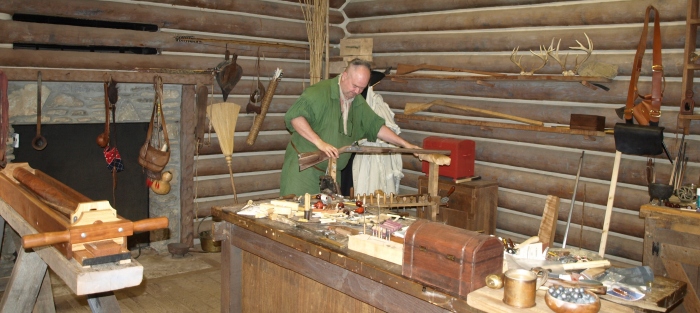
Larry MacQuown. gunmaker
|
|
 |
 |
|
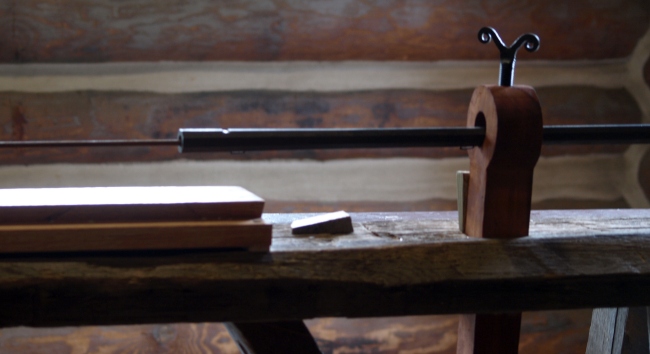
The gun maker’s shop in the fort is a good place to discover the processes of learning a trade in the 18th. Century. Whether by Indenture, or Apprenticeship, the variations in contracts and agreements varied widely. Larry MacQuown interprets the building of flintlock guns, and has researched the various means of learning the gunsmith’s trade in the 18th Century. His shop also includes an amazing piece of 18th century machinery called a rifling bench, used to cut internal, spiral grooves in rifle barrels for improved long range accuracy. Come try it out as an “apprentice”
|
 |
|
|
 |
|
|
 |
 |
 |
 |
|
New Interpretation Program at Fort Boonesborough
|
|
|
|
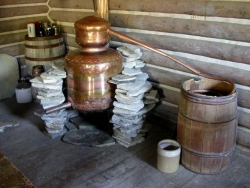
Early Kentuckians quickly learned that getting corn to market was an arduous and time consuming task. But it was a more profitable operation when the corn was converted to liquor. To that end, Fort Boonesborough has added a still for interpretive purposes.
“It was such an everyday part of frontier living,” says Fort Manager, Bill Farmer, “that including it here seemed only natural.” Funded by the Fort Boonesborough Foundation the new equipment arrived earlier this month and will be on display during the Siege Weekend.
|
|
 |
 |
|
The original Fort Boonesborough was built by Daniel Boone and his men in 1775
|
 |
 |
|
All material contained in this site is © 2006 -2013 Fort Boonesborough
|
|
|
 |
|